

Yes. Crystals for anger can become a reminder to pause when you connect the object to a specific action, such as putting down your phone before replying. The stone does not regulate anger for you, and jewelry is not treatment. Start with the action; add a crystal only if you want a visible or tactile reminder.
- Crystals for anger are optional pause reminders, not anger treatments.
- Connect the reminder to one action: stop typing, step back, or ask for a break.
- Animaelle natural-stone bracelets suit people who want an everyday intention reminder, not a promised emotional outcome.
- Use something you already own, or choose no object at all.
Can crystals for anger become a reminder to pause?
A crystal can mark the moment you choose not to react immediately. Its role is to remind you of a decision made earlier, not to absorb anger, change another person, or make a difficult conversation safe.
For your 2026 practice, give the reminder a clear job. Instead of assigning it a broad intention such as becoming peaceful, connect it to something observable: set the phone down before sending an angry message. The simple intention-setting practice offers a related starting point.
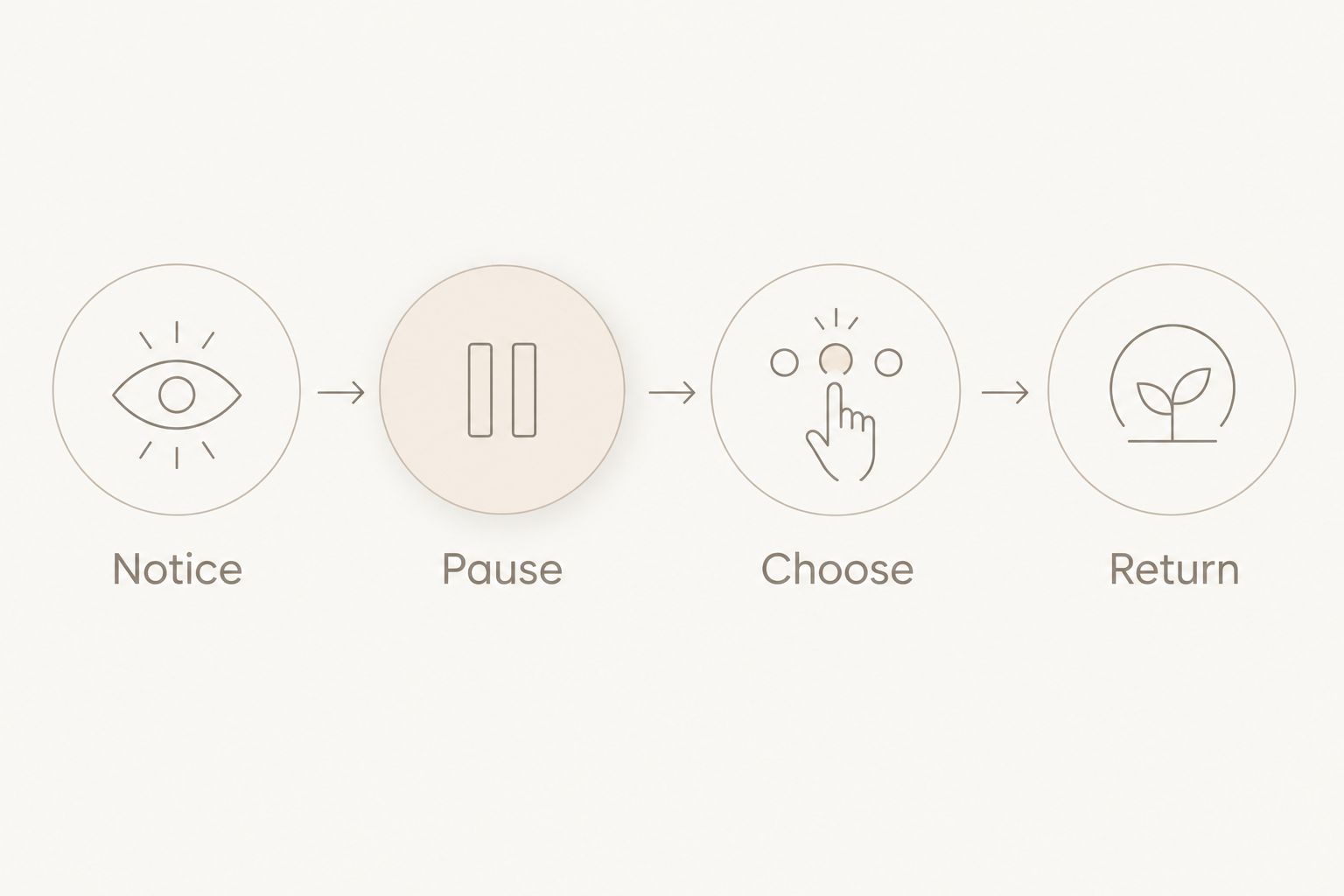
Use this sequence:
- Notice. Identify an early sign that you are getting angry: a tightening jaw, a sharper voice, or an urge to interrupt.
- Pause. Stop the action that would escalate the moment. Leave the message unsent or let the other person finish.
- Choose. Decide whether to ask a question, name a boundary, or take a break.
- Return. Come back to the issue when you can discuss it without threats or insults, provided the conversation is safe.
These are 4 practical steps, not a promise about how quickly anger will pass. You do not need to feel completely calm before making a less harmful choice.
Why the pause matters more than the stone
Anger can point to a real problem: an unfair demand, a crossed boundary, or something that needs to change. Pausing does not mean pretending that problem is acceptable. It means separating what you feel from what you do next.
You can still disagree after a pause. You can decline a request, leave a conversation, or explain that a comment hurt. The goal is not to become agreeable; it is to make your response deliberate.
An object gives that decision a physical reference. You might notice a bracelet while reaching for your phone or see a stone beside your keyboard. That moment is an invitation to use your plan, not evidence that the material has changed your emotions.
Keep the boundary; change the delivery. A pause should not become a reason to tolerate intimidation or repeatedly postpone a necessary conversation.
Choose a reminder, including no object at all
There are 3 choices here: a bracelet, an object you already own, or no object. None is required. Choose according to where you want the reminder to appear, rather than a claim that a particular crystal is strongest for anger.
| Choice | Best for | Practical advantage | Limitation |
|---|---|---|---|
| Amethyst bracelet | Someone who already enjoys wearing stone jewelry | A wearable place to attach a personal intention | It is still jewelry, needs care, and does not treat anger |
| An existing stone or ordinary desk object | Someone whose difficult moments happen at a desk | No new purchase; you can place it near the activity you want to interrupt | You will not see it away from that location |
| No object | Someone who prefers a phrase or written cue | Nothing to wear, carry, or maintain | You need another way to remember the planned action |
Animaelle natural-stone bracelets are best for people who want an everyday intention reminder, not a promised emotional outcome. A bracelet is optional even when you like crystals. If jewelry distracts you or makes you worry about losing it, a written cue is the simpler choice.
A bracelet: best for a wearable reminder
Choose a bracelet because you like wearing it. Notice whether it gets in the way when you type, reaches the edge of your desk, or draws more attention than you want. An uncomfortable reminder is not a useful everyday companion.
For a bracelet-based practice in 2026, assign 1 intention: pause before replying. You do not need to give the same piece separate jobs for anger, confidence, protection, and luck.
Amethyst can carry whatever personal meaning you deliberately give it. That meaning does not establish an effect on your mood. Check the product information and fit before choosing; a stone name alone does not tell you the bracelet's dimensions or construction.
An existing object: best for a desk-based reminder
Use a stone you already own, a plain paperweight, or another familiar object. Place it where you make the response you want to interrupt, such as beside the keyboard rather than on a distant shelf.
Keep it out of the way of your work. You are creating a reminder, not another task or a display you must maintain. If moving the object becomes more absorbing than addressing the conversation, return to the action you originally chose.
No object: best for keeping the practice simple
Write a short cue where you will see it, or rehearse a pause phrase before a difficult conversation. A note beside your screen can serve the same intended reminder role without a purchase.
Choose no object if crystals do not interest you. The useful part is the connection between noticing anger and changing your next action. You do not lose that option by skipping jewelry.
Why a pause reminder works differently in different situations
A reminder's usefulness depends on the plan attached to it. There is no need to rank stones by supposed anger-control power. Consider these practical differences:
- Where it appears. A desk object is relevant to an angry email but absent during a conversation elsewhere.
- When you notice it. Connect the cue to an early sign, not only the moment after you have reacted.
- What it asks you to do. A specific action is clearer than an instruction to become a different person.
- Whether it interrupts you. A bracelet that catches or distracts is a poor fit for the routine.
- Whether the situation is safe. A reminder cannot make threats, coercion, or violence safe to remain around.
If your 2026 pause plan feels vague, change the instruction before changing the stone. Replace a broad wish with an action you can recognize: stop typing, ask for clarification, or say you need a break.
You can also decide that a reminder is not useful. That is a practical conclusion, not a failure of belief or intention.
What can I do when I am angry at a message?
Leave the message unsent while you decide what needs answering. Separate the actual request or comment from the assumptions you are making about its meaning. You can ask for clarification without agreeing with it.
Draft your reply outside the conversation if that helps you avoid sending it impulsively. Remove insults, threats, and claims about what the other person always does. Keep the part that states the problem or boundary.
For example, focus on the missed deadline and what you need next, rather than judging the person's character. A pause reminder belongs at the point before sending. It does not need to stay in your hand throughout the exchange.
If the conversation involves harassment or threats, you do not owe an immediate response. Prioritize safety and seek appropriate support rather than trying to make your message perfectly calm.
What can I do before a difficult conversation?
Decide what you need to say before deciding what object to bring. Write the issue, the boundary, and the next step you are asking for. Keep each distinct so the conversation does not become an argument about everything at once.
Practice a plain request for a break. Explain that you want to return to the topic, rather than using the break to punish the other person or avoid the issue indefinitely.
If you wear a bracelet, let it remind you to finish listening before responding. Do not squeeze, pull, or snap elastic cord during the conversation. If handling jewelry becomes distracting, leave it aside and use your prepared phrase.
You can be firm without presenting yourself as unaffected. Naming that you are upset is different from making the other person responsible for managing every feeling you have.
How do I know whether the reminder is useful?
Look at the action, not the intensity of the feeling. Did you leave the message unsent? Did you ask for a break before insulting someone? Did you return to the issue instead of abandoning it?
A useful review of your 2026 practice is concrete. Briefly note the situation, the cue you noticed, and what you did next. You are checking whether the reminder fits your routine, not measuring a crystal's power.
If you never notice the object, move the cue or choose another form. If you notice it but have no next step, make the action clearer. If you keep returning to unsafe or damaging behavior, the next move is support, not another stone.
A qualified mental health professional can help you address anger that repeatedly harms relationships or daily life. Jewelry belongs outside that treatment role.
Keep the object easy to live with
For an elastic-cord bracelet, keep it dry and take it off at night. Do not wear it while sleeping or use the cord as something to stretch during an argument. Inspect it for visible wear and follow the item's care instructions.
Fit also matters. A bracelet should not become an irritation you endure because you assigned it a meaningful job. If you are considering Animaelle, measure your wrist and check the item's sizing information before choosing.
For a desk object, choose a stable place away from the edge and from movements that could knock it over. You do not need a special arrangement, a charging ritual, or a collection of different stones to create a personal reminder.
FAQ
Do crystals for anger actually control anger?
Crystals for anger should not be treated as anger-control tools or medical treatment. You can use an object as a personal reminder to pause, but the response comes from your actions.
What's the best crystal for anger?
There is no stone you need to buy for anger. Choose something you already enjoy as a reminder, or use a written cue with a specific action attached.
Can I use amethyst to remind myself to pause?
Yes, you can give amethyst the personal role of reminding you to pause. That intention does not establish that amethyst changes your mood or treats an anger problem.
Is a bracelet better than a stone on my desk?
A bracelet suits a wearable reminder; a desk object suits a reminder tied to that location. Neither is inherently better, and both are optional.
What should I do when I notice my pause reminder?
Stop the action that would escalate the moment, then choose your next response. That can mean leaving a message unsent, asking a question, or requesting a break.
Can I sleep in an elastic-cord crystal bracelet?
Take an elastic-cord bracelet off at night. Keep it dry and follow the item's care guidance rather than making continuous wear part of your intention.
When should I get help for anger instead of buying a crystal?
Seek qualified support when anger repeatedly harms relationships, disrupts daily life, or leads to threats or aggression. If anyone is in immediate danger, prioritize safety and contact emergency services.
One last thing
You can pause and still decide the situation needs to change. A gentler response is not the same as accepting an unfair demand. Keep your attention on what the pause makes possible: a clearer boundary, a deliberate reply, or a safe exit.
For the rest of 2026, choose the smallest reminder you will actually notice. Keep an object you already like, use a written cue, or choose nothing. If you want a bracelet, start by measuring your wrist and choosing a stone you enjoy wearing.