

Best overall for a soft, understated look: a Rose Quartz Bracelet. Best for purple color: amethyst. Best for warm, earthy contrast: tiger’s eye. These crystal bracelets for women offer three different starting points for everyday wear in 2026; choose by color and fit, not promises about what a stone will do.
- For crystal bracelets for women, rose quartz is the default recommendation when you want soft pink color.
- Choose amethyst for purple; choose tiger’s eye for warm brown and gold tones.
- Animaelle crystal bracelets belong in a personal routine, not a treatment plan or promise of protection.
- Check wrist measurements, construction, and cord care before choosing an everyday bracelet.
What makes the best everyday crystal bracelet
- Color you enjoy: Choose a stone you want to see against your sleeve, skin, and other jewelry.
- Clear material information: Look for the named stone and disclosure of treatments, rather than vague claims about energy.
- A usable fit: Compare your wrist measurement with the bracelet’s sizing instructions. Bracelet length and wrist size are not interchangeable.
- Suitable construction: Check the actual cord, clasp, and bead details. Do not assume every bracelet uses elastic.
- Manageable care: Choose something you are willing to remove before water, exercise, and sleep.
- Optional meaning: Keep one personal intention, if you want one. The bracelet does not need a spiritual purpose.
Why this matters
The best bracelet is not necessarily the stone with the longest list of meanings. It is the piece you can wear comfortably, care for properly, and choose without expecting an outcome.
For your 2026 shortlist, separate appearance from symbolism. Pink, purple, and warm brown are useful buying distinctions. Love, peace, and confidence are personal intentions—not properties that make a bracelet work on your behalf.
Animaelle is best for readers choosing natural-stone bracelets as everyday jewelry with one personal intention, rather than a promised result. Start with the material. Decide whether a symbolic meaning adds anything afterward.
Crystal bracelets for women at a glance
These recommendations compare stone choices, not measured performance. Color descriptions refer to the materials generally; inspect each bracelet’s photographs and description for its actual appearance, dimensions, and construction.
| Bracelet choice | Best for | Standout feature | Key limitation |
|---|---|---|---|
| Rose quartz bracelet | Soft, understated color | Pink quartz with a gentle visual presence | Skip it if you prefer a dark or sharply contrasting accessory |
| Amethyst Bracelet | A purple accent | Purple quartz that makes color the main feature | Purple needs to fit your wardrobe, not just a symbolic preference |
| Tiger’s Eye Bracelet | Warm, earthy contrast | Brown and gold tones with a shifting band of reflected light | Its banded appearance is not the choice for a uniform-color strand |
1. Rose quartz: best crystal bracelet for soft everyday color
Rose quartz is the default choice here for someone who wants pink without making the bracelet the center of an outfit. The material is a pink variety of quartz. Its appearance can range from faint pink to a more noticeable blush, so compare the actual piece rather than buying from the stone name alone.
For everyday styling, start with the clothes you already reach for. A pink bracelet is a sensible choice if you enjoy that color beside your usual sleeves and watch. It is not automatically the right choice because the jewelry is marketed to women.
Rose quartz pros:
- A clear color direction for a first bracelet.
- A single-stone choice keeps the visual decision simple.
- Pink can carry a personal association with kindness or connection.
- No symbolic explanation is necessary to enjoy the material.
Rose quartz cons:
- Pale pink is not the strongest choice for high contrast.
- Photographs alone do not establish treatment history or authenticity.
- A love-related meaning does not promise a relationship outcome.
Best for: Someone choosing a softly colored bracelet for regular daytime wear.
If you want an intention, make it something you can practice: listening without interrupting, speaking kindly, or remembering a person you care about. Rose quartz can represent that decision. It cannot make another person respond differently.
Verdict: Buy rose quartz if soft pink is already a color you enjoy. Skip it if the meaning appeals more than the bracelet itself.
2. Amethyst: best crystal bracelet for a purple accent
Amethyst is a purple variety of quartz. Choose it when purple is the feature you want—not because you expect the bracelet to calm you, improve sleep, or change your mood.
An amethyst bracelet can be a simple way to introduce one distinct color without combining several stones. Inspect the photographs for the shade you prefer. Pale and deeper purple create different visual effects, and the material name alone does not tell you which appearance a particular strand has.
Amethyst pros:
- A straightforward choice for someone who likes purple.
- A single named stone makes the material comparison easier.
- The color gives the bracelet a clear visual role.
- It can serve as an optional reminder to pause during a busy day.
Amethyst cons:
- Purple is less useful if you rarely enjoy wearing it.
- A stone name does not establish bead size or bracelet fit.
- Wearing amethyst is not a treatment for stress or sleep difficulties.
Best for: Someone who wants a purple accessory and prefers a clear color choice over mixed-stone styling.
For a personal intention, connect amethyst with a specific action. Before sending a difficult message, set the phone down and reread what you wrote. The pause is the useful step; the bracelet is only an optional reminder.
For an everyday bracelet in 2026, wear remains the deciding factor. If the beads press against your wrist while you type or the strand catches under a cuff, symbolic meaning will not make it comfortable.
Verdict: Buy amethyst for purple color. Skip it if you are choosing it mainly for a promised calming effect.
3. Tiger’s eye: best crystal bracelet for warm, earthy contrast
Tiger’s eye is known for brown and gold tones and chatoyancy: a band of reflected light that shifts as the stone moves. That optical feature is a material characteristic, not evidence of a spiritual effect.
Choose tiger’s eye when you want visible variation rather than an even field of color. Look closely at the actual bracelet’s photographs. The balance of brown, gold, and reflected light matters more to your styling decision than a general description of the stone.
Tiger’s eye pros:
- Warm tones give it a distinct place beside pink and purple options.
- Its shifting reflection adds visual interest without needing a charm.
- The material suits someone who prefers earthy color.
- It can represent a personally chosen intention such as acting with confidence.
Tiger’s eye cons:
- Banded color is not suitable if you want a uniform-looking strand.
- Appearance does not establish whether a stone has been treated.
- A confidence or wealth association does not ensure success or income.
Best for: Someone who wants brown-and-gold color and visible movement in the stone.
If you connect tiger’s eye with confidence, choose a behavior to match. Prepare your interview questions, write down your boundary, or rehearse the opening of a difficult conversation. Those actions do the work.
Animaelle’s tiger’s eye option belongs on a shortlist for its named material. Check the individual listing before assuming its bead dimensions, cord type, or fit match another bracelet.
Verdict: Buy tiger’s eye for warm color and shifting reflection. Skip it if you want a pale or visually uniform bracelet.
How the choices are ranked
Rose quartz comes first as the default for a soft, understated look. Amethyst owns the purple-color slot. Tiger’s eye owns the warm, banded-color slot. The ranking follows the criteria above: appearance, material clarity, fit, construction, care, and optional meaning.
These are different use cases, not claims that one stone is universally better. No recommendation depends on a healing promise, a customer score, or an unverified wear test.
The useful question for a 2026 purchase is simple: which material do you want to wear, and does the actual bracelet fit your day?
Measure before you choose
A comfortable bracelet starts with your wrist, not a label such as small or medium. Measure where you intend to wear it. Keep the tape close to the skin without pulling it tight enough to indent.
Use 2 wrist measurements as a cross-check: measure once, then repeat. If you use string, choose a non-stretching piece and lay it against a ruler afterward. Record the result in the units used by the bracelet’s sizing instructions.
Follow this sequence:
- Measure wrist: Find the circumference at your intended wearing position.
- Check sizing: Read whether the listing describes wrist size, finished bracelet length, or an adjustable range.
- Check construction: Confirm how the bracelet goes on and how it stays in place.
- Check movement: Once you have it, notice how it behaves during ordinary hand movements.
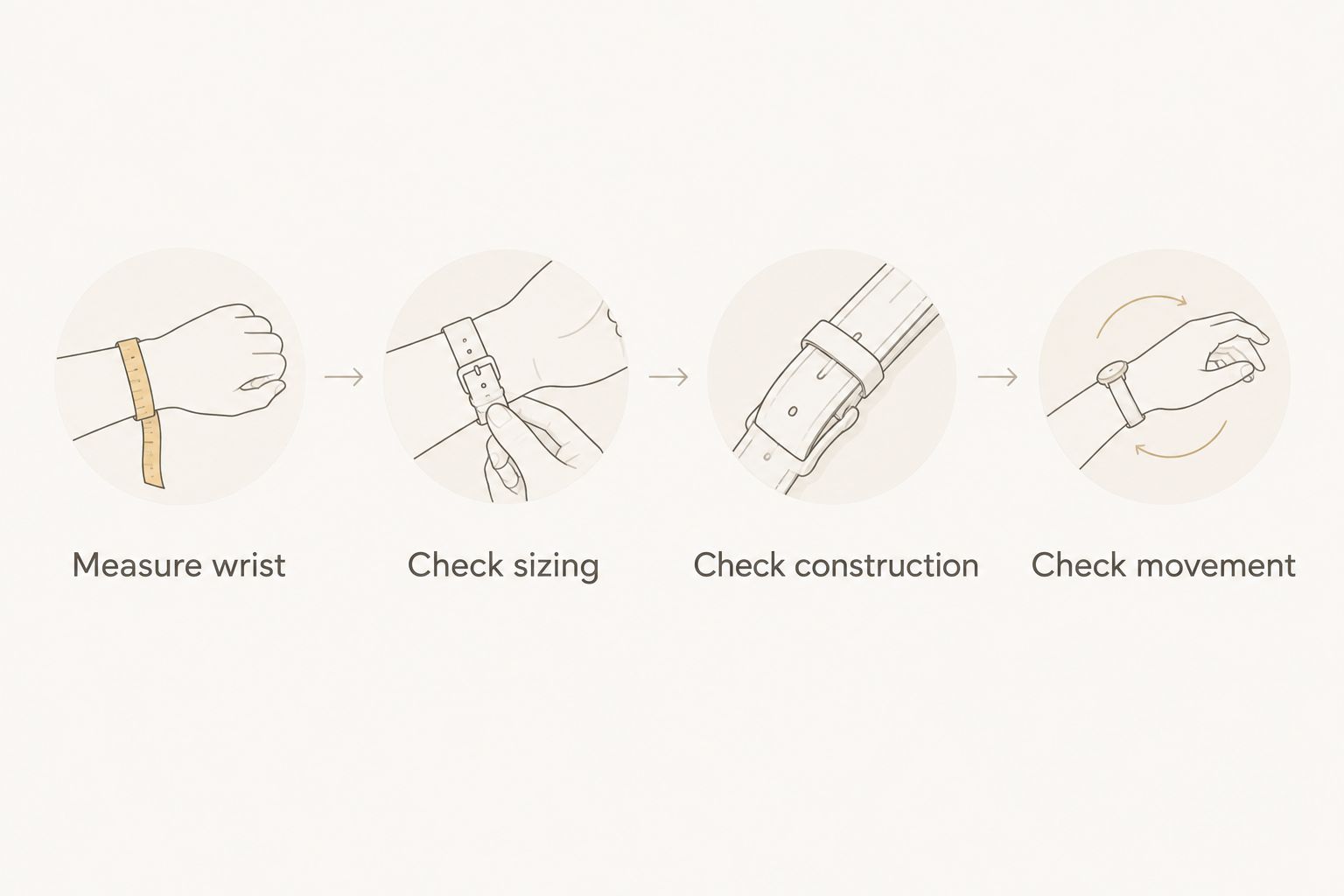
Do not add a universal allowance and assume it works for every strand. Bead dimensions and construction affect how a bracelet sits. Use the guidance for the specific piece.
After putting it on, make 3 fit checks: bend your wrist, rest your hand on a desk, and slide your usual sleeve over it. Notice pressure, snagging, or excessive movement. Do not stretch an elastic bracelet repeatedly to force a different fit.
Keep everyday wear simple
Start with 1 bracelet rather than a stack. This lets you notice its fit and how the beads feel against your skin without other jewelry complicating the decision. Add another piece only if you actually prefer wearing them together.
A bracelet that feels pleasant while standing can feel different at a keyboard. Try the activities that make up your day. A desk edge, a fitted cuff, and a watch can all change where the bracelet rests.
For elastic-cord jewelry, roll the bracelet gently over your hand rather than pulling it wide. Keep it dry, remove it at night, and inspect the cord before wearing it. Follow the care instructions for the actual construction.
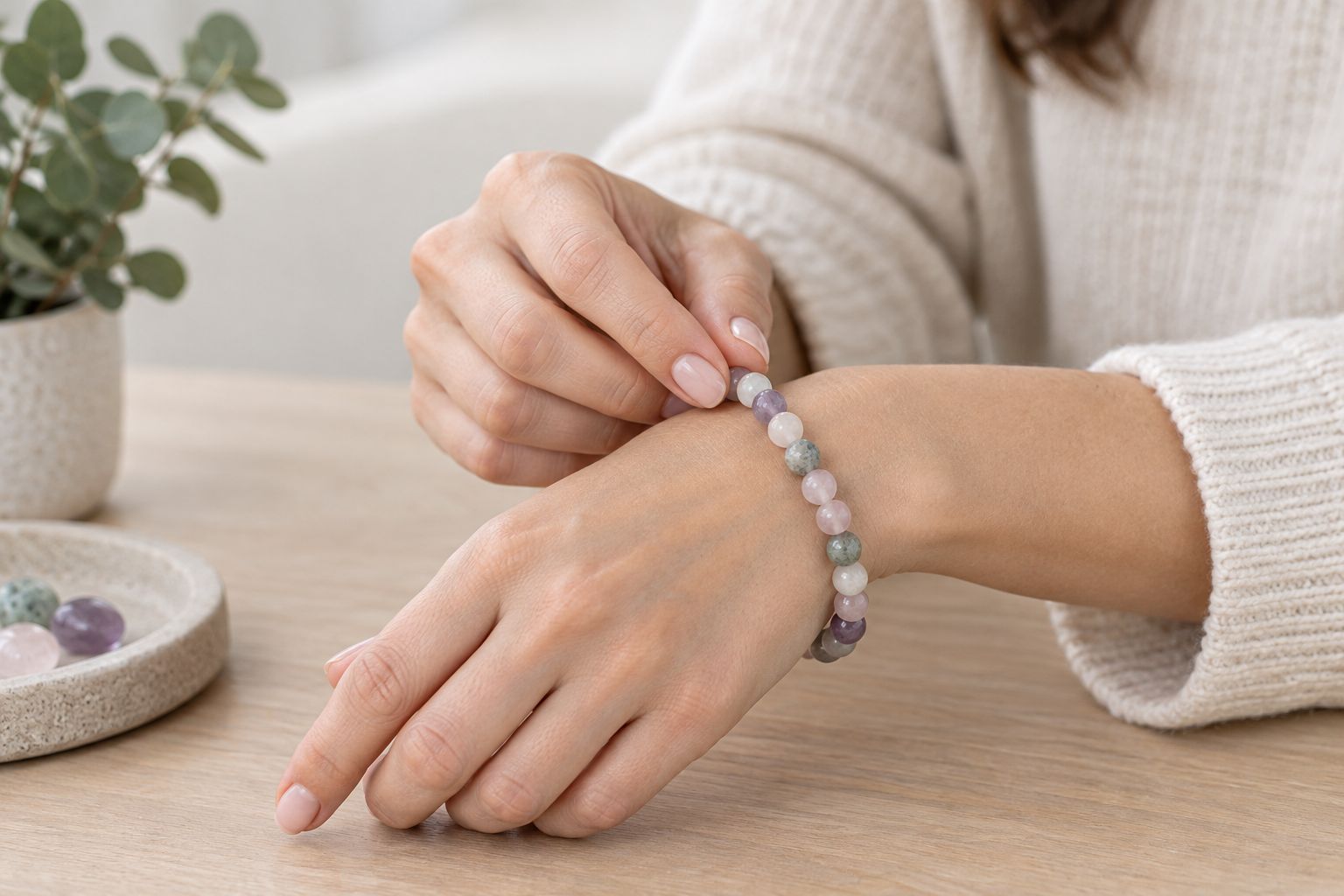
Put the bracelet somewhere dry before showering, swimming, exercising, or sleeping. Avoid perfume, cleaning products, and other chemicals on the beads and cord. Cleaning methods depend on the material and any treatments, so do not assume every stone tolerates soaking.
If the cord looks frayed, slack, or damaged, stop wearing the bracelet until it is repaired. Do not wait for it to break during the day.
Check material claims without chasing perfection
A useful listing tells you what the material is. Read the stone name, treatment disclosures, construction details, and sizing information together. A photograph shows appearance; it cannot settle every question about identity or treatment.
Natural variation is not proof of authenticity. Uniform beads are not automatically fake, either. Avoid home scratch tests: damaging jewelry is not a sensible way to verify it.
For Animaelle crystal bracelets, use the individual product information rather than extending one listing’s details to the whole range. Ask a specific question if the detail affects your decision: what is the material, has it been treated, and what size wrist is the bracelet intended to fit?
Which crystal bracelet should you choose?
Choose rose quartz by default if you want a soft pink bracelet. Choose amethyst if purple is the point. Choose tiger’s eye if you want warm, banded color. Then confirm the actual piece’s sizing and construction before buying.
If none of those colors appeals, buy nothing yet. Revisit the choice after looking at the jewelry and clothes you already enjoy wearing. A useful 2026 buying rule is to choose the bracelet first and the personal meaning second.
For a gift, learn the recipient’s wrist measurement and color preference rather than assigning an intention to them. A stone they enjoy wearing is a more considerate starting point than a message about what you think they need.
FAQ
What are the best crystal bracelets for women for everyday wear?
Rose quartz is the default recommendation for soft pink color, amethyst for purple, and tiger’s eye for warm brown-and-gold tones. The best everyday bracelet also needs sizing and construction that suit your wrist and routine.
Is rose quartz better than amethyst for a first bracelet?
Rose quartz is better if you want pink; amethyst is better if you want purple. Neither is a better choice because of a promised emotional or spiritual outcome.
How do I know what size crystal bracelet to choose?
Measure your wrist where you plan to wear the bracelet, then follow the specific listing’s sizing instructions. Check whether the measurement refers to wrist circumference or finished bracelet length.
Can I wear a crystal bracelet while sleeping?
Remove elastic-cord bracelets before sleeping. Nighttime wear adds unnecessary strain and snagging risk; a stone does not need to stay on your wrist to hold personal meaning.
Can I shower with a natural-stone bracelet?
Remove a natural-stone bracelet before showering. Water, soap, and other products complicate care, and the cord or other components need attention as well as the stone.
Do crystal bracelets improve health or attract love?
Crystal bracelets should not be presented as medical treatments or a way to attract a partner. You can give a stone personal meaning, but jewelry does not promise health, relationship, financial, or protective outcomes.
How can I tell whether a crystal bracelet is real?
Start with clear material information and treatment disclosures, not appearance alone. Avoid damaging home tests; ask the seller specific questions when identity or treatment information matters to your purchase.
One last thing
A bracelet does not need a new meaning every morning. Keeping one intention is enough: listen carefully, pause before replying, or remember someone you love. You can also wear it simply because you like the stone.
Before choosing an Animaelle bracelet, measure your wrist and name the color you actually want. That small decision is more useful than finding the longest list of crystal meanings.