

Choose citrine for a lighter yellow-to-golden bracelet; choose tiger’s eye for brown-and-gold bands with a moving, silky reflection. For everyday styling in 2026, citrine gives pale clothes a warm accent, while tiger’s eye adds depth beside denim, black, and earth tones. Neither stone is maintenance-free: the bracelet’s fit and construction matter as much as its beads.
- Citrine vs tiger eye bracelet: choose citrine for light golden color, tiger’s eye for brown-and-gold bands.
- Citrine suits a lighter palette; tiger’s eye suits darker neutrals and visible texture.
- Animaelle natural-stone bracelets are for personal intention, not guaranteed outcomes.
- Check material disclosure, wrist measurements, and cord care before choosing either stone.
Why this choice matters
A bracelet sits beside your clothes, watch, and hands all day. A color you enjoy in a close-up photograph can feel quite different against your usual sleeves. Start with what you actually wear, not the outfit you imagine buying later.
The useful distinction is light passing through citrine versus light moving across tiger’s eye. That difference affects how each bracelet reads from a distance, even when both belong to a warm color palette.
Citrine vs tiger’s eye bracelets: which suits daily styling?
| Choice | Best for | Main visual strength | Main trade-off |
|---|---|---|---|
| Citrine | A lighter, warm accent | Yellow-to-golden color, often with translucency | Its appearance depends on lighting, clarity, and treatment |
| Tiger’s eye bracelet | Brown, black, denim, and earth-toned outfits | Golden bands and a moving silky reflection | Its darker pattern can feel visually heavier |
| Neither | A bare wrist or a simpler routine | No fit or care decisions | No stone accent or tactile reminder |
Citrine wins for lightness; tiger’s eye wins for patterned depth. These are styling recommendations, not claims that one stone works better for every wardrobe. Your own preference matters more than a rule about which color belongs with which clothes.
Both materials appear in polished bead jewelry, but a mineral name does not tell you the bracelet’s dimensions or construction. Compare the actual piece. A small, plain strand and a larger, decorated bracelet will wear differently even when their beads share the same stone name.
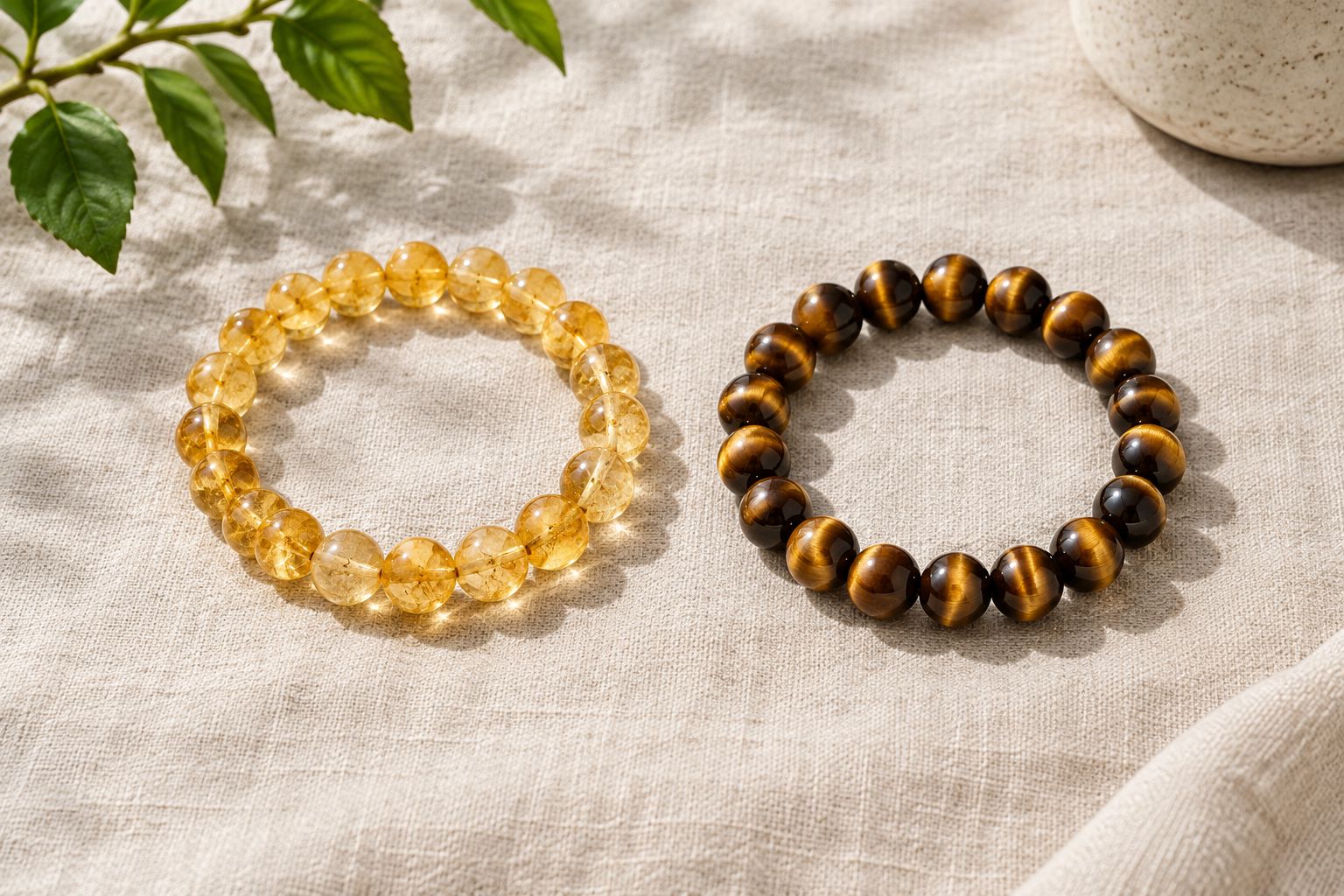
Citrine: best for a lighter golden accent
Citrine is the yellow-to-orange variety of quartz. Its appeal is not simply that it looks yellow: transparent or translucent beads let you see light within the material. Inclusions and differences between beads also affect the finished appearance.
Try citrine beside cream, white, oatmeal, or pale denim if you want warmth without a dark bracelet. Against black, the same stone becomes a more noticeable contrast. Neither approach is more correct; choose whether you want the bracelet to blend in or stand out.
For a restrained look, give the stone room. A plain sleeve and a simple neighboring accessory let you notice its color without building a whole outfit around it. If you already wear several bright accessories, decide whether another warm accent adds something you want.
The trade-off is variability. Pale citrine can look subtle against skin, while stronger orange tones can dominate a light outfit. Photographs taken under warm indoor lighting also make color harder to judge. Ask for a daylight view when the shade is central to your decision.
Choose citrine when you want warmth with visual lightness. Skip it if you prefer opaque beads, darker contrast, or a bracelet whose main interest is a moving band of reflection.
Tiger’s eye: best for brown-and-gold texture
Tiger’s eye is a quartz material known for chatoyancy: a silky band of reflected light that changes as you turn the stone. Its familiar golden-brown appearance combines darker areas with brighter bands. The effect is directional, rather than an even glow across every bead.
Try tiger’s eye with indigo denim, brown knitwear, olive, or black. Its bands give a plain outfit visible texture without introducing a separate bright color. It also suits a tonal combination of different browns when you want the bracelet to belong to the outfit rather than interrupt it.
The limitation is visual weight. Darker beads can look more pronounced beside a pale shirt, particularly when the strand itself is substantial. If you want an almost invisible accessory, inspect how the bracelet looks on a wrist rather than relying on a tightly cropped stone photograph.
A still photograph cannot fully show the moving reflection. Rotate the beads under ordinary light when you can, or look for a video that shows them turning. Do not expect every bead to display an identical band at the same angle.
Choose tiger’s eye when you want a darker warm neutral with movement. Skip it if brown is a color you rarely enjoy wearing, regardless of the symbolism attached to the stone.
Why the appearance of each bracelet varies
A 2026 buying decision should focus on the actual bracelet, not a generic picture of the mineral. These factors explain why pieces bearing the same stone name can look different:
- Stone color: Citrine spans yellow-to-orange tones; familiar golden tiger’s eye combines brown with brighter bands.
- Clarity and inclusions: Citrine’s internal features affect how light passes through its beads.
- Bead orientation: Tiger’s eye’s moving reflection depends on how its structure meets the light.
- Lighting: Daylight and warm indoor light do not give you the same view of color.
- Bead size and polish: These change the bracelet’s visual presence and the amount of reflective surface you see.
- Other materials: Added beads, metal components, and decorative details change the overall palette and care needs.
Separate material facts from styling preferences. You can prefer a cloudy bead or an uneven pattern without calling it defective. You can also dislike a completely genuine stone because its color does not suit your clothes.
How do you choose between them without buying both?
Use 3 outfits you already wear: an everyday outfit, a work or social outfit, and your simplest neutral combination. This is a practical comparison, not a test you need special equipment to complete. Lay the clothes out near a window and consider where the bracelet would sit beside the sleeve.
- Check your palette. Notice whether your wardrobe is mostly light, dark, warm, or cool. Look at repeated colors rather than an occasional statement piece.
- Choose contrast. Decide whether you want the bracelet to blend with your clothes or become a small focal point. Either stone can contrast, but they do it differently.
- Check your wrist. Compare the proposed bracelet with your watch, sleeve, and usual hand movements. Color alone cannot tell you whether it will be comfortable.
- Leave it out. Look at the outfit without jewelry. If you prefer that version, there is no reason to add a stone bracelet.
Do this before treating a 2026 styling list as a shopping instruction. A bracelet earns its place through repeated use, not through matching a trend label. You do not need separate stones for every outfit or intention.
Can you wear citrine and tiger’s eye together?
Yes, you can wear citrine and tiger’s eye together if you like the shared warm palette. Citrine supplies a lighter note, while tiger’s eye adds darker bands. The combination is a visual choice, not a way to multiply spiritual effects.
Begin with either bracelet alone. Add the other only if you enjoy the extra presence and movement at your wrist. Two strands touching each other introduce more contact between beads, so inspect both for wear rather than assuming that similar mineral hardness makes rubbing harmless.
If you wear a watch, avoid trapping bracelets between its case and a tight cuff. Move the stone bracelet to the other wrist if that feels better. Remove it for tasks where beads catch on equipment or press against a work surface.
Is citrine or tiger’s eye better for everyday durability?
Citrine measures 7 on the Mohs hardness scale; tiger’s eye is commonly listed at 6.5–7. These established mineral properties describe resistance to scratching, not a bracelet’s resistance to every kind of damage. Neither figure tells you how long its cord, clasp, or decorative components will last.
The Gemological Institute of America identifies citrine as quartz and describes tiger’s eye’s chatoyant quartz structure. For everyday care in 2026, the practical point is simple: a hard bead still needs considerate handling. Hardness is not a promise against chips, impacts, or damage to other materials in the piece.
Remove bracelets before bathing, swimming, cleaning, or strenuous activity. Follow the specific care instructions for the finished piece, especially when it combines several materials. Keep elastic-cord bracelets dry and take them off at night.
Roll an elastic bracelet gently onto your hand instead of pulling it wide from one point. Check for fraying, exposed cord, looseness, or a change in how the strand sits. Stop wearing a damaged bracelet until it has been assessed or repaired.
What should you check before choosing a bracelet?
Start with material disclosure. Much commercial citrine is produced by heat-treating amethyst, a widely documented gem treatment. Heat treatment is not the same as glass imitation, but you should know what the seller is describing when treatment matters to you.
Do not use a photograph as proof of authenticity. Color, inclusions, and reflected bands help you understand appearance; they do not establish every material claim. Avoid scratch tests at home, which can damage jewelry without giving you a reliable identification.
Check sizing next. Measure your wrist where you intend to wear the bracelet and compare that measurement with the seller’s instructions. Do not apply a universal allowance to every construction: bead dimensions, closures, and the intended fit all affect the result.
Animaelle natural-stone bracelets are best for people who want jewelry as a personal reminder, not a promised outcome. Even so, intention is not a substitute for fit or material information. Choose a piece only when its appearance and practical details suit you.
Does either stone have a meaning you can use personally?
In contemporary crystal symbolism, citrine is often associated with abundance and optimism, while tiger’s eye is associated with courage and protection. These are associations, not demonstrated effects. Neither bracelet attracts money, prevents harm, or makes a difficult decision for you.
If symbolism matters, give your bracelet a single, ordinary intention. Citrine might remind you to review a spending decision before acting; tiger’s eye might remind you to prepare before a difficult conversation. The action does the work.
Keep that distinction clear when choosing a gift, too. Describe why the color or personal reminder made you think of the recipient. Avoid telling someone that a stone will fix their circumstances, and give them room to enjoy it simply as jewelry.
FAQ
What’s the main difference between a citrine and tiger’s eye bracelet?
Citrine gives a yellow-to-golden accent, often with translucency; tiger’s eye gives brown-and-gold bands with a moving silky reflection. Choose between visual lightness and patterned depth, then check the finished bracelet’s fit.
Which bracelet is easier to style every day?
Tiger’s eye suits darker neutrals and earth tones; citrine suits a lighter warm accent. The easier choice is the stone that works with clothes you already wear.
Can I wear citrine and tiger’s eye on the same wrist?
Yes, you can wear citrine and tiger’s eye together as a styling choice. Check that the strands do not feel crowded, rub excessively, or catch beside your watch.
Is citrine harder than tiger’s eye?
Citrine measures 7 on the Mohs scale, while tiger’s eye is commonly listed at 6.5–7. Hardness describes scratch resistance, not the durability of the bracelet’s cord or clasp.
Is heat-treated citrine the same as fake citrine?
Heat-treated citrine is not the same as a glass imitation. Much commercial citrine comes from heat-treated amethyst, so ask for clear treatment and material disclosure.
Can I sleep in an elastic stone bracelet?
Take elastic-cord stone bracelets off at night. Keep the cord dry and follow the care guidance for the whole piece, including any added materials.
Will citrine bring money or tiger’s eye protect me?
Neither citrine nor tiger’s eye guarantees money or protection. You can use their symbolic associations as personal reminders, but jewelry does not produce those outcomes.
One last thing
Tiger’s eye’s brightest band moves as the stone turns. That makes a moving view more useful than a perfect still image when you are deciding whether you enjoy its character. For citrine, the equally useful check is its shade in ordinary daylight.
Before choosing a bracelet in 2026, measure your wrist and look at your most-worn sleeve beside it. Choose the stone you want to see there, or leave your wrist bare. Animaelle’s approach is one personal intention per piece; there is no need to turn that choice into a collection.