

Choose rose quartz for a soft, cloudy pink; choose strawberry quartz for pink-to-red color with visible mineral inclusions. For everyday jewelry in 2026, the deciding factors are the actual beads, clear material disclosure, and comfortable fit—not a promise that either stone will change how you feel.
- Rose quartz vs strawberry quartz comes down to soft pink versus visible inclusions, then bracelet fit and material disclosure.
- Rose quartz is best for a quieter pink bracelet; its pale color can look subtle against your skin.
- Strawberry quartz is best for visible texture; ask what the seller means by the name before choosing.
- Animaelle suits natural-stone bracelet buyers who want a personal reminder rather than a promised result.
Why this matters
A pink bracelet needs to suit your wrist before it suits an intention. Color, bead shape, and fit are things you can judge. Claims about attracting love or changing your mood are not material specifications.
When browsing natural-stone bracelets at Animaelle, separate the stone description from the meaning you give it. You can choose a bracelet as a reminder to be kinder to yourself without expecting the material to do that work.
Buy the appearance you enjoy wearing. Leave the promised outcome behind.
Rose quartz vs strawberry quartz: which pink stone suits you?
Rose quartz is the better match if you want a relatively even, understated pink. Strawberry quartz suits you if you enjoy visible inclusions and a more textured appearance. Neither name alone tells you how a finished bracelet will look.
Use this comparison for your 2026 shortlist, then check the actual item photographs and material description.
| Choice | Best for | What to look for | Advantage | Limitation |
|---|---|---|---|---|
| Rose quartz, including the Rose Quartz Bracelet | Soft pink and a quieter look | Pink tone, cloudiness, bead finish, and fit | A less patterned appearance | Pale beads can look almost white in some light; the page name alone does not verify construction |
| Strawberry quartz | Visible mineral texture | Inclusions, transparency, and clear material disclosure | More detail within individual beads | The trade name needs clarification; a photograph cannot establish identity |
| Neither | Anyone who dislikes both appearances or lacks enough product information | A clear reason to wear the piece | No need to settle for an uncertain choice | You keep looking rather than choosing now |
The rose quartz link is an example to inspect, not evidence of its bead dimensions, cord type, or treatment status. Read the current description before deciding whether that particular bracelet meets your needs.
A stronger pink is not automatically a better stone. A clearer bead is not automatically more natural. Those are appearance preferences, separate from identification.
Rose quartz: best for soft, cloudy pink
Rose quartz is a pink variety of quartz, commonly translucent rather than fully transparent. Its cloudy appearance can make the color feel diffuse instead of sharply defined. Individual pieces range from very pale pink to more noticeable pink.
Choose it when you want the bracelet to sit quietly beside a sleeve or watch. Look at the complete strand, not just an enlarged bead. A close-up shows texture; a wrist photograph shows how much visual space the bracelet takes up.
The main advantage is a softer, less patterned look. The drawback is that very pale material can lose much of its apparent pink against certain skin tones, clothing, or bright lighting.
For your 2026 choice, ask whether the photographs show the actual strand or a representative example. Natural variation makes that distinction useful. A photograph of another bracelet does not tell you the exact shade of the one you will receive.
You do not need a darker specimen to make the choice meaningful. If you prefer the almost-white pink, that preference is enough.
Strawberry quartz: best for visible inclusions
Strawberry quartz is a trade name used for quartz with reddish inclusions. Inclusions are material enclosed within the host crystal. Their distribution helps create the spotted or textured appearance associated with the name.
Choose it when you enjoy looking into a bead rather than seeing an even wash of color. Some pieces show distinct flecks; others have more diffuse reddish areas. The actual strand matters more than the most vivid example you have seen elsewhere.
The main advantage is visible detail. The drawback is that the name does not provide a complete material description. Ask whether the beads are natural quartz, what treatments are disclosed, and whether any part is glass or another material.
Keep that question neutral. You are asking what you are buying, not trying to prove a seller wrong. A clear answer is more useful than an elaborate story about the stone.
Do not expect every inclusion to look like a tidy red dot. Natural material does not need to resemble a repeated pattern, and a repeated pattern is not, by itself, proof of imitation.
Why the pink appearance varies
Rose quartz and strawberry quartz do not have a single fixed jewelry appearance. These factors explain why two bracelets carrying the same name can look different:
- Color intensity: Pale pink and stronger pink create different levels of contrast against your skin.
- Inclusions: Visible material within strawberry quartz changes the texture you see inside individual beads.
- Transparency: Light passing through a bead changes how you perceive its internal detail.
- Bead shape: Rounded and faceted surfaces reflect light differently, changing the appearance of the same material.
- Lighting: Direct sun, indoor light, and photographic editing affect the pink shown in a listing.
- Treatments or imitation materials: Dye, coatings, or glass change what the item is; disclosure matters more than appearance alone.
Compare photographs taken under similar conditions. If one listing uses bright backlighting and another uses a dim wrist photograph, you are comparing photography as well as stones.
A white background helps you judge color, but it does not reproduce your skin or clothing. Look for both a clear close-up and a view of the bracelet being worn.
How to choose your everyday bracelet
Keep the decision practical. This 2026 checklist applies whether you prefer cloudy pink or a strand with more visible texture.
- Compare color. Look at the full bracelet beside something neutral. Decide whether you want a pale accent or a more noticeable pink.
- Check material. Read the material wording separately from the product title. Ask about treatments or imitation components when the description leaves them unclear.
- Measure wrist. Measure where you intend to wear the bracelet, then follow that item's sizing instructions. Do not assume another seller uses the same fit convention.
- Check construction. Identify the cord, clasp, or adjustable fastening. Stone identity alone does not tell you how the bracelet will feel or how to care for its other parts.
- Choose or pause. Choose only when the appearance, fit, and description agree with what you want. An unanswered material question is a reason to wait.
A bracelet can look right and still feel wrong. Notice whether it slides into your hand, presses against your wrist, or interferes with your sleeve. Comfortable wear matters more than an attractive close-up.
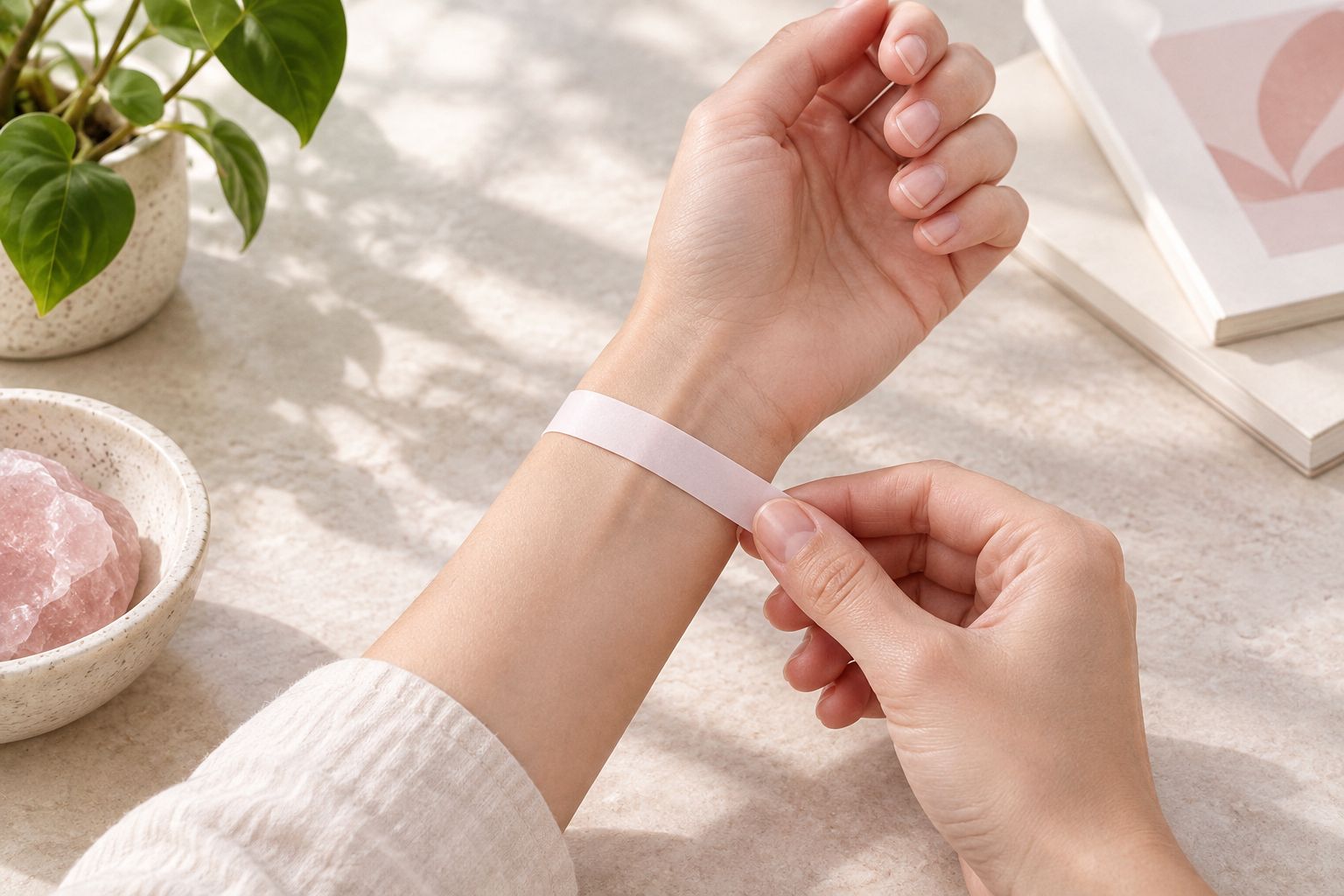
If you are choosing a gift, confirm the recipient's preference before attaching a meaning to it. Soft pink is not universally appealing. A simple question about color and wrist fit is more helpful than assuming what someone needs emotionally.
How can you check whether the stone is genuine?
Start with disclosure, not a home scratch test. Ask the seller to identify the material plainly and explain any treatments. A confident product name is not the same as an identification report.
Natural quartz has a hardness of 7 on the Mohs scale. That describes scratch resistance, not authenticity. Other materials can resemble quartz, and testing a finished bracelet can damage the beads, finish, or surrounding components.
Useful questions for a 2026 purchase include:
- Are the beads natural quartz, glass, or another material?
- Is dye, coating, or another treatment disclosed?
- Do the photographs show the actual item or a representative strand?
- Is there an identification report, and does it refer to this item?
A photograph can show color and obvious surface details. It cannot reliably establish mineral identity or rule out treatment. When identification matters to your decision, use a qualified gemologist rather than relying on online visual tests.
Avoid treating bubbles, temperature, or a single visual feature as a complete answer. You need an identification, not a collection of clues that happen to support the choice you already prefer.
Which pink stone is easier to care for?
Neither stone wins on care simply because of its name. Quartz's Mohs hardness of 7 applies to genuine rose quartz and genuine quartz sold as strawberry quartz, but the assembled bracelet also contains drilled beads and a fastening material.
Hardness is not toughness. Quartz can chip from impact, and a durable bead does not make an elastic cord durable. Care for the whole piece, not just the mineral.
For routine wear, keep the approach simple:
- Remove the bracelet before activities that expose it to impact or snagging.
- Apply cosmetics and perfume before putting it on.
- Use a soft cloth for routine surface cleaning.
- Follow the seller's instructions before wet cleaning, especially if treatments or cord materials are unclear.
- Check drilled holes, bead edges, and the fastening for visible wear.
Take an elastic bracelet off by rolling it gently over your hand rather than pulling it into a long loop. If the cord looks frayed or the bracelet no longer holds its usual shape, stop wearing it until it is repaired.
There is no need for an elaborate cleansing routine. Your practical goal is a clean surface, sound construction, and care that suits the materials.
Does either stone work better as a personal intention?
Neither stone has an established medical effect or a proven ability to attract love. You can still give a bracelet a personal meaning. The distinction is between using an object as a reminder and expecting an object to cause an outcome.
Choose one intention you can act on: speaking more kindly, making time for someone, or keeping a boundary you have already decided on. Let the bracelet point back to that action.
Animaelle's natural-stone bracelet framing fits a personal reminder, not a guaranteed result. The same boundary belongs in your own choice: a pink stone can accompany a decision, but it cannot make that decision for you.
You can also choose it only because you like pink. Jewelry does not need a deeper explanation to belong in your day.
FAQ
What's the main difference between rose quartz and strawberry quartz?
Rose quartz usually has a softer, cloudy pink appearance, while strawberry quartz is sold for its reddish inclusions and visible texture. Compare the actual beads and ask for a clear material description.
Which is better for an everyday pink bracelet?
Rose quartz is better for a quieter pink look; strawberry quartz is better if you enjoy visible inclusions. Neither is the better choice when the fit or material description is unclear.
Is strawberry quartz always natural?
The name strawberry quartz alone does not establish that an item is natural quartz. Ask the seller to identify the material and disclose treatments or imitation components.
Can I tell whether strawberry quartz is real from a photo?
A photograph cannot reliably establish strawberry quartz identity or rule out treatment. Use it to judge appearance, and seek qualified gemological identification when certainty matters.
Can I wear rose quartz or strawberry quartz in the shower?
Remove the bracelet before showering unless its care instructions explicitly permit it. The cord, fastening, and any treatments matter as well as the quartz beads.
Does rose quartz or strawberry quartz help with anxiety?
Neither stone is an established treatment for anxiety. A bracelet can be a personal reminder, but it is not a substitute for appropriate care.
How should I choose an Animaelle pink-stone bracelet in 2026?
Choose by the item's stated material, actual appearance, fit, and care instructions. Keep any personal intention separate from claims about what the stone will do.
One last thing
Check the whole strand before the prettiest bead. A bracelet is something you wear as a complete piece. One vivid close-up does not show its overall color balance, fit, or fastening.
Measure your wrist, choose the pink you genuinely like, and pause if the material description leaves you uncertain. Neither stone is a necessary purchase.