

Start bedtime meditation by sitting comfortably, choosing something simple to notice, and returning to it whenever your attention wanders. Try a short practice without buying anything; an optional crystal can be a personal reminder, not a sleep aid. Put any bracelet aside before sleeping, and let the practice end without requiring yourself to feel different.
- Start bedtime meditation with ordinary breathing or room sounds; no crystal is necessary.
- Use an optional crystal as an intention reminder, not a treatment for sleep problems.
- Animaelle natural-stone bracelets belong off your wrist before sleep, even when used during an evening practice.
- Choose a short wind-down routine you can repeat without judging how relaxed you feel.
How to start bedtime meditation with an optional crystal
Begin with attention, not equipment. You need a comfortable place and something ordinary to notice: the movement of breathing, a steady room sound, or the contact between your body and the chair. A stone is optional throughout.
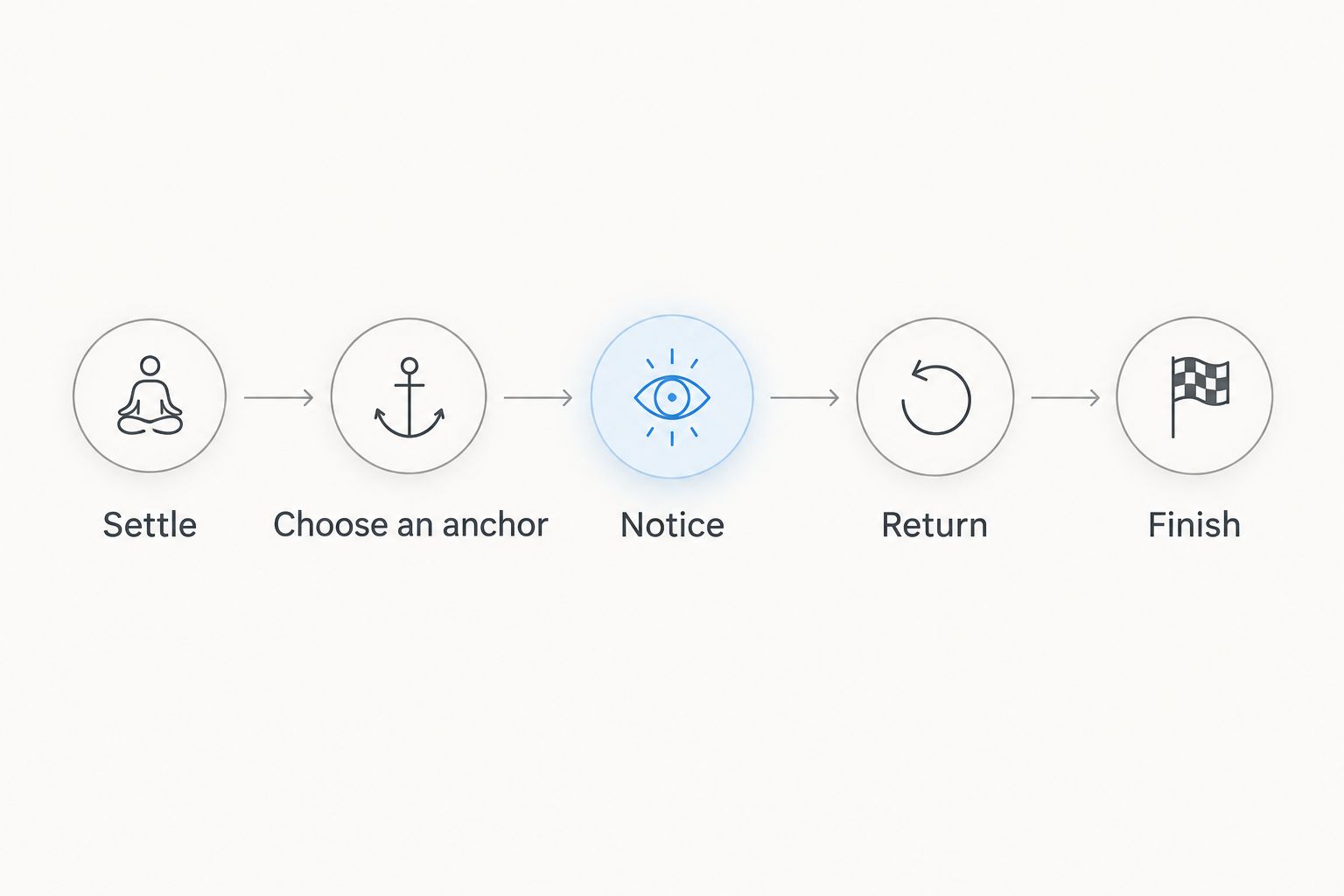
For a suggested 2-minute practice, use this sequence. These timings are a starting structure, not a proven dose or a promise of better sleep:
- Settle: Spend about 30 seconds finding a comfortable position.
- Choose an anchor: Decide what you will notice without trying to change it.
- Notice: Spend about 1 minute returning to that anchor when thoughts interrupt.
- Return: Treat each distraction as another opportunity to begin again.
- Finish: Use the remaining 30 seconds to end, put objects aside, and continue your bedtime routine.
If symbolism matters to you, keep it separate from predictions about what will happen. The guide to crystals, intuition, and reflection offers a related way to think about that distinction.
The sequence stays the same whether you use a stone or nothing at all. You are practising a small action: noticing where attention went and bringing it back.
Settle without searching for a perfect posture
Sit on a chair with your feet supported, or sit comfortably on the bed before lying down. Let your hands rest somewhere easy. There is no need to cross your legs, hold a formal pose, or arrange a meditation corner.
Keep your eyes open, lower your gaze, or close them if that feels comfortable. Choose the version that asks less of you tonight. If a position hurts, change it rather than treating discomfort as part of the exercise.
Separate this moment from the last task of the evening. Finish the message, put the phone down, then begin. Trying to meditate while waiting for a reply leaves you with another job to monitor.
Choose an anchor you do not need to control
An anchor is simply what you return your attention to. If you choose breathing, notice an ordinary inhale or exhale without making it unusually deep. You do not need breath holds, counting patterns, or a prescribed pace.
If watching your breathing feels uncomfortable, choose something outside it. Notice a steady room sound or the feeling of your feet on the floor. The anchor should make the practice simpler, not give you another task to perform correctly.
Keep the same anchor for this short session unless it becomes uncomfortable. Switching because you are curious is fine; repeatedly searching for the perfect sensation is unnecessary.
Notice what is here, including distraction
Pay attention to a small detail: air passing at your nose, fabric beneath your hands, or a sound that continues without your involvement. You do not need to describe every sensation. Just notice what is present.
Thoughts about tomorrow can appear alongside that attention. Recognising a thought does not mean you need to finish it. Let an unfinished plan remain unfinished for this brief interval.
If something genuinely needs remembering, write a short note before continuing. That is a practical adjustment, not a failure of meditation. Return once the reminder is somewhere you can find it tomorrow.
Return without grading yourself
When you realise you have been thinking about work, dinner, or a conversation, return to the chosen anchor. No apology is necessary. The return is part of the practice, not evidence that you did it badly.
Avoid keeping a mental score of distractions. That turns attention into a test. Instead, make each return ordinary: notice the thought, then notice the sound or sensation again.
You do not have to reach an empty mind before ending. Finish the session you chose, even if it felt busy throughout.
Finish deliberately
Let your attention widen to the room. Move your hands, look around, and stand or lie down when ready. End without checking whether you are sufficiently calm.
If you used a stone, place it on a stable surface away from the bedding. If you used a bracelet, remove it before sleep. Keep small objects out of reach of children and pets.
Then continue with the ordinary parts of bedtime. Meditation does not need a separate ceremony or an immediate result to have a clear beginning and end.
Why this matters: bedtime is not another performance test
A bedtime routine can become crowded with things you feel obliged to do correctly. Adding meditation should not create another demand. Keep the practice small enough that a tired evening does not require an elaborate setup.
The aim of this beginner routine is to practise returning your attention, not to make sleep happen. You can finish while still having thoughts, feelings, and unfinished questions. None of those requires a verdict about how well the session went.
Keep the distinction clear if you have ongoing sleep difficulties. Bedtime meditation is a personal practice, not a diagnosis or a replacement for appropriate care. A crystal does not change that boundary.
Which bedtime meditation anchor should you choose?
Choose the option that feels least demanding, not the one with the strongest claims attached to it. Each has a practical use and a limitation. You can change your choice on another evening without changing the whole routine.
| Anchor | Best for | Practical advantage | Limitation |
|---|---|---|---|
| Ordinary breathing | People comfortable noticing breath | Requires no object or recording | Breath attention can feel uncomfortable; switch if it does |
| Room sounds | People who prefer attention outside the body | Lets you practise without adjusting breathing | Sudden or irritating sounds can pull attention away |
| Body contact | People who prefer a physical point of attention | Uses feet, hands, or the support beneath you | Pain or an awkward posture needs adjustment, not endurance |
| Optional stone | People who enjoy personal symbolism | Gives an intention a physical reminder | Adds an object to handle and put away; it is not a sleep treatment |
For your first session, pick something already available. Notice the chair rather than searching for an object. Listen to the room rather than spending the evening comparing recordings.
A guided recording is another way to receive instructions, but it is not necessary for this routine. If you use one, choose it before beginning and stop browsing. The search for the ideal voice can become a separate evening activity.
How can an optional crystal fit into the routine?
Use a crystal only if its presence means something to you. It can mark a decision such as leaving work until tomorrow or meeting yourself with less criticism. That meaning is personal; it does not establish a physical effect on sleep.
Place the object nearby while you practise, or briefly notice its surface before returning to your chosen anchor. Keep handling simple. You do not need to cleanse it, charge it, arrange several stones, or adopt unfamiliar ritual language to begin.
Animaelle natural-stone bracelets suit people who want a personal intention reminder, not a sleep treatment. If you already want a wearable reminder, the Amethyst Bracelet is an optional example to consider for daytime wear. Check its current material and sizing details before choosing it, and remove it before sleeping.
A bracelet also adds care and fit decisions that a no-object practice avoids. That is a reason to skip the purchase when the routine itself is what you want. Animaelle jewelry is not required for bedtime meditation.
If you own a meaningful object already, there is no need to replace it with a particular stone. What matters in this routine is the intention you choose and the action you practise. The object does not do that work for you.
Why your bedtime meditation routine varies
A useful routine leaves room for the actual evening you are having. Adjust the setup rather than insisting that every session look identical.
- Your available time: A brief practice fits an evening when you are already tired. Leave longer sessions for a time you choose deliberately.
- Your posture: A chair, the edge of the bed, or another supported position changes what feels comfortable to notice.
- Your response to breath attention: Use room sounds or body contact if concentrating on breathing feels unpleasant.
- Your surroundings: Noise, shared rooms, and interruptions affect which anchor is practical.
- Your interest in symbolism: Keep a stone nearby only when its personal meaning adds something you want.
- Your jewelry care: Wearing a bracelet during an evening practice does not mean leaving it on overnight.
Change one part when something is not working. If the chair is uncomfortable, move. If a crystal feels like clutter, put it away. You do not need to rebuild the entire routine around a difficult evening.
How long should bedtime meditation last for a beginner?
2 minutes is the suggested starting length for this routine, not a universal minimum. It gives you a clear beginning and end without asking you to commit to a long session. Shorten it if the setup feels burdensome, or continue if you want to keep practising.
Use a timer only if it removes the need to watch the clock. Choose a gentle signal and leave the screen alone. If a timer itself feels distracting, finish after a brief period of attention without measuring it.
Do not use duration as proof that the session worked. A longer practice does not establish a better night's sleep, and this routine makes no such promise.
Can I meditate in bed without falling asleep?
You can practise sitting on the bed before lying down, but you cannot require yourself to stay awake through willpower alone. Choose a chair if you want a clearer distinction between practice and sleep. Keep your posture comfortable rather than using discomfort to remain alert.
If you become sleepy, end the practice and put any object away. There is no need to restart because the session ended earlier than planned. Remove jewelry before settling under the covers.
The practical boundary matters more than completing a script. Do not fall asleep holding a loose stone or wearing an elastic-cord bracelet.
What should I do when thoughts keep interrupting bedtime meditation?
Return to your anchor whenever you notice the interruption. You do not need to argue with the thought or replace it with a positive one. Acknowledge that it appeared, then notice the room sound or physical contact again.
For a task you are afraid of forgetting, make a brief note outside the meditation. For a conversation you cannot resolve tonight, leave the question unanswered for this session. Meditation is not a requirement to settle every concern before bed.
If inward attention feels distressing, stop. Open your eyes, orient yourself to the room, and choose an ordinary activity instead. Persistent distress deserves appropriate support, not a stricter ritual or another stone.
FAQ
What's the simplest bedtime meditation for a beginner?
Notice ordinary breathing, room sounds, or the contact of your body with a chair, then return whenever attention wanders. Keep the practice brief and finish without requiring an empty mind.
Do I need a crystal for bedtime meditation?
No, bedtime meditation requires no crystal or purchase. Use a stone only if you want a physical reminder of a personal intention.
How long should I meditate before bed?
Try 2 minutes as a suggested starting structure, not a proven sleep prescription. Adjust the length so the practice remains comfortable and manageable.
Which crystal is best for bedtime meditation?
No crystal is established here as a sleep aid. If you want an optional object, choose one you already own or genuinely like for its personal meaning, not a promised result.
Can I sleep wearing my crystal bracelet?
Remove your crystal bracelet before sleeping. Animaelle's evening-use guidance keeps bracelets off at night rather than making overnight wear part of the practice.
What if paying attention to my breath makes me uncomfortable?
Switch to room sounds or the contact between your body and a supported surface. Stop the practice if it feels distressing; you do not need to force breath attention.
Will bedtime meditation or a crystal cure insomnia?
Neither this routine nor a crystal should be presented as a cure for insomnia. Seek appropriate healthcare advice for persistent sleep difficulties rather than relying on jewelry or a bedtime ritual.
One last thing: choose a stopping point
The useful part of a bedtime routine can be knowing when to stop adding to it. Choose your anchor, practise briefly, and put things away. Do not turn a quiet pause into an evening of researching the next improvement.
If a stone still appeals to you, choose one intention rather than assigning it every hope at once. If a bracelet is your preferred reminder, measure your wrist and check the product's fit guidance. You can also leave your hands empty and begin tonight.